
Georgia Uses Superior Court as Its Trial Court
Georgia does not use the term district court for its general trial court. The right name is Superior Court. The Georgia.gov Superior Courts page describes Superior Court as the state's general-jurisdiction trial court with exclusive authority over felony, divorce, equity, and title-to-land cases. Each judicial circuit covers one or more counties. Clayton County is the Clayton Judicial Circuit.
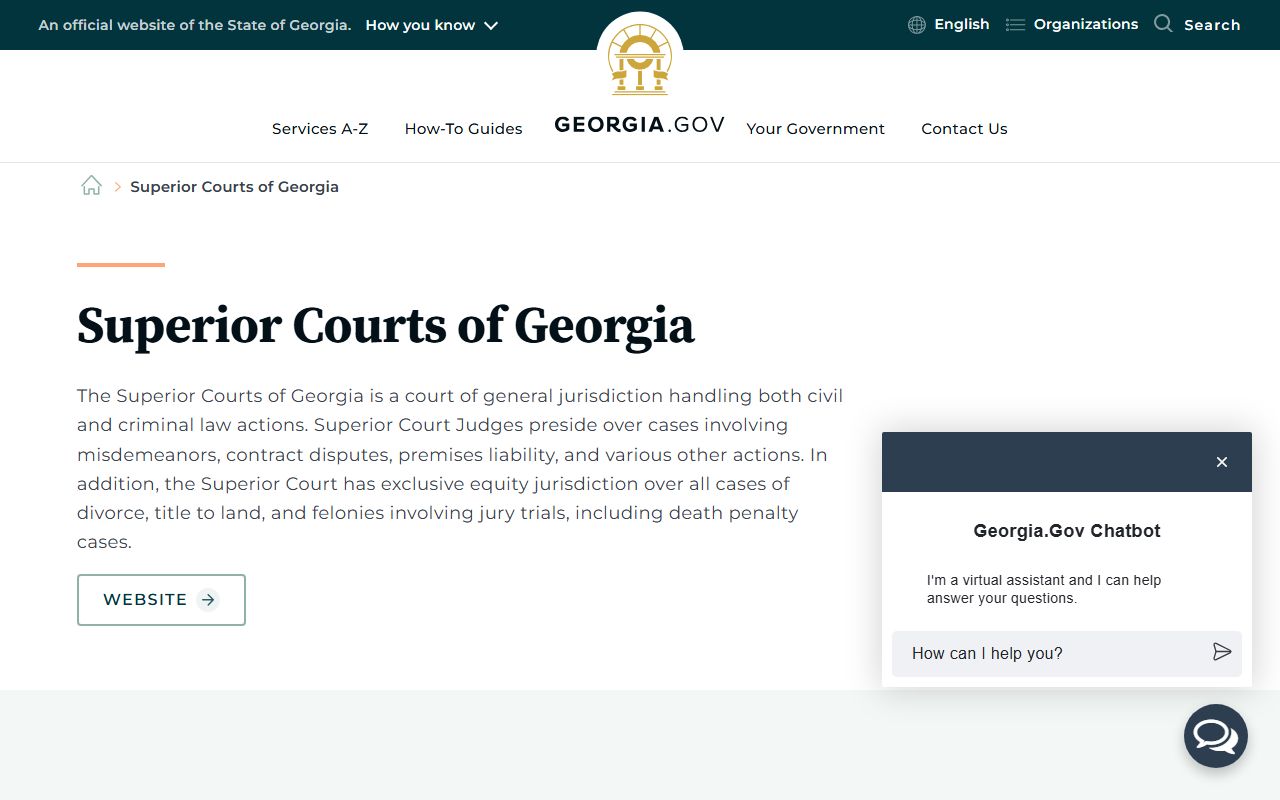
The Georgia.gov page above explains the statewide framework for Superior Court and links to circuit information.
Clayton Superior Court Judges
The Clayton Superior Court page lists five judges who serve four-year elected terms. The roster matches the listing on the official Clayton Superior and State Courts site.
| Judge | Role |
|---|---|
| Chief Judge Robert L. Mack | Chief Judge, Clayton Judicial Circuit. |
| Judge Geronda V. Carter | Superior Court judge. |
| Judge Aaron B. Mason | Superior Court judge. |
| Judge Shana Rooks Malone | Superior Court judge. |
| Judge Jewel Scott | Superior Court judge. |
Superior Court Jurisdiction
Superior Court has broad civil and criminal authority. Georgia statute and constitutional rules give Superior Court exclusive jurisdiction over felony criminal cases, divorce, equity, and title-to-land matters. Superior Court can also correct errors by lower courts through writ or appeal. State, Magistrate, Probate, and Juvenile Court files can move up to Superior Court when the case type requires it.
- Felony criminal prosecutions filed by the District Attorney.
- Divorce, separation, and family-law actions.
- Equity actions, including injunctions and declaratory judgments.
- Title-to-land actions and quiet title disputes.
- Civil suits above the small-claims and State Court ranges.
- Appeals from lower Clayton courts as provided by law.
Felony Criminal Cases
The Clayton Courts page explains that felony cases are prosecuted by the District Attorney's office. Public defenders represent indigent defendants. The Superior Court calendar moves felonies from indictment through arraignment, motions, plea, and trial. Sentencing is on the same docket. The five Superior Court judges rotate through the criminal calendar, and the Clerk of Superior Court keeps the official record.
Defendants who are in active custody on a felony booking can be found through the Clayton inmate search. The Court Case Inquiry portal can show the formal court file after the case is opened in the Judicial Information System.
Divorce, Equity, and Land Cases
Divorce, separation, equitable distribution, and family-law modifications all live in Superior Court. Equity actions include injunctions, declaratory judgments, and other relief that requires the court's broad authority. Title-to-land actions also belong in Superior Court because Georgia law sets exclusive jurisdiction there. Clayton Superior Court runs an ADR program and a Divorcing Parents Seminar that support these cases.
Appeals from Lower Courts
State, Magistrate, and Probate Court decisions can be reviewed in Superior Court where Georgia statute provides. The case-flow diagram below shows the standard upward path. A bound-over case from Magistrate Court is the most common upward move in Clayton.
Case flow: Magistrate Court › State Court › Superior Court › Court of Appeals of Georgia › Supreme Court of Georgia
| Superior Court | State Court | Magistrate Court |
|---|---|---|
| General jurisdiction; exclusive felony, divorce, equity, title to land. | Limited jurisdiction within Clayton County; misdemeanor, traffic, civil not exclusive to Superior. | Small claims to $15,000; dispossessory, garnishment, warrants, first appearances. |
| District Attorney prosecutes felonies. | Solicitor-General prosecutes misdemeanors and traffic. | Issuing officer and DA referrals. |
| Five elected judges, four-year terms. | Multiple State Court judges including the Chief Judge. | Magistrate judges; small-claims and warrant work. |
Courthouse Location
Harold R. Banke Justice Center
Clayton Superior Court
9151 Tara Boulevard
Jonesboro, GA 30236
(770) 477-3395
The Banke Justice Center also houses State Court, the Clerk of Superior Court, court administration, and the law library. The Sheriff's Office is next door at 9157 Tara Boulevard.
Superior Court Programs
Clayton Superior Court administration coordinates several programs alongside its standard docket. Drug Court and DUI Court are accountability courts that combine judicial monitoring with treatment, drug testing, sanctions, and incentives. ADR supports civil and family settlement before trial. The Divorcing Parents Seminar is a required program for many divorce filers with minor children. Adult misdemeanor probation services support State Court sentencing. The law library at the Banke Justice Center supports both bench and pro se filers.
How to Find a Clayton Superior Court Case
The fastest way to find a Superior Court case is the Court Case Inquiry portal. Use the criminal name search for felony cases and the civil name search for civil and divorce cases. Filter the court dropdown to Superior Court to keep results focused.
- Open the Court Case Inquiry portal.
- Choose Civil Search for divorce and civil cases, or Criminal Case Search for felony cases.
- Choose Name Search or Case Search.
- Select Superior Court on the court dropdown.
- Enter the last name or the year, two-letter type, five-digit sequence, and optional division.
- Open the case detail to see the assigned judge, case summary, and docket.
About the Clayton Judicial Circuit
Georgia organizes Superior Court by judicial circuit. Many circuits cover several counties, but the Clayton Judicial Circuit covers only Clayton County. That gives the five Superior Court judges a single-county docket. The Chief Judge oversees calendar assignments and circuit administration. The judges run rotating responsibility for the felony, civil, and family calendars to keep the docket moving.
The clerk's office and the judges work closely on calendar management. A felony case in the Banke Justice Center can run from indictment through trial in front of the same judge, or it can be reassigned for case-management reasons. The official Clayton Superior Court page is the best source for the current calendar and judge rotation.
How a Case Moves Through Superior Court
A typical felony case in Clayton Superior Court follows a recognizable sequence. The diagram below sketches the path from arrest to final disposition.
- Arrest by the Sheriff's Office or another agency.
- Booking at the Clayton County Jail; bond review at first appearance in Magistrate Court.
- Grand jury indictment in Superior Court for felony charges.
- Arraignment and entry of plea in Superior Court.
- Motions, discovery, and pre-trial conferences.
- Plea or jury trial before the assigned Superior Court judge.
- Sentencing and entry of judgment.
- Appeal, if filed, through the Court of Appeals of Georgia.
Search Tips for Superior Court Records
Superior Court name searches can return many results for common surnames. The narrowing tools below help cut the list down.
- Add a first initial or first name to the name search.
- Filter the court dropdown to Superior Court when only Superior cases matter.
- Use case-number search if a court notice provides the full case number.
- Watch the status column: Disposed cases are closed; Pending cases are still open.
- Confirm the judge listed on the case before calling the chambers about a hearing.